kg/hr to m3/hr – Easily convert kg/hr to m3/hr and vice versa. This free calculator uses fluid density to convert Mass Flow Rate to Volumetric Flow Rate accurately. Includes density charts.
kg/hr ⇄ m³/hr Converter
Density is required. Water ≈ 1000, Air ≈ 1.2.
Result:
0.00
Converting Mass Flow (kg/hr) to Volume Flow (m³/hr)
The Difference Between kg/hr and m³/hr
In engineering and processing, we measure flow in two main ways:
- Mass Flow (kg/hr): Measures the weight of the substance passing through the pipe per hour. This is common in chemical reactions and steam systems where the mass of the molecules matters.
- Volumetric Flow (m³/hr): Measures the space (volume) the substance occupies per hour. This is common for selecting pump sizes and pipe diameters.
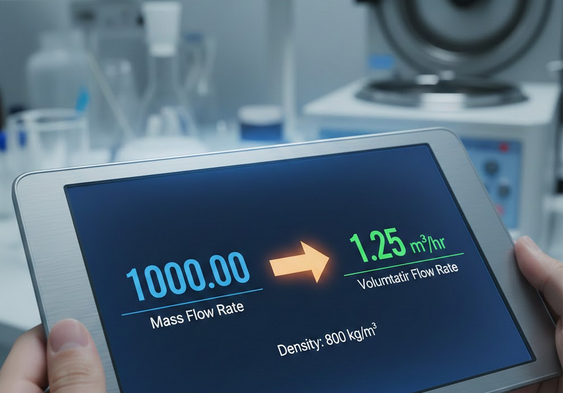
The Critical Variable: Density
You cannot convert kilograms to cubic meters without knowing how heavy the substance is. This property is called Density (ρ), usually measured in kg/m³.
Conversion Formulas
1. To convert kg/hr to m³/hr (Mass to Volume):Volume Flow = Mass Flow ÷ Density
2. To convert m³/hr to kg/hr (Volume to Mass):Mass Flow = Volume Flow × Density
Calculation Example
Scenario: You are pumping Diesel fuel. You know the Mass Flow rate is 5,000 kg/hr. You need to select a pump rated in m³/hr.
- Identify Density: Diesel has a density of approximately 850 kg/m³.
- Apply Formula: 5,000 (kg/hr) ÷ 850 (kg/m³) = Result.
- Result: 5.88 m³/hr.
Common Density Reference Table (Approx)
| Substance | Density (kg/m³) |
|---|---|
| Water (4°C) | 1000 |
| Engine Oil | 880 - 920 |
| Diesel | 820 - 860 |
| Petrol / Gasoline | 715 - 780 |
| Air (Atmospheric) | 1.225 |